
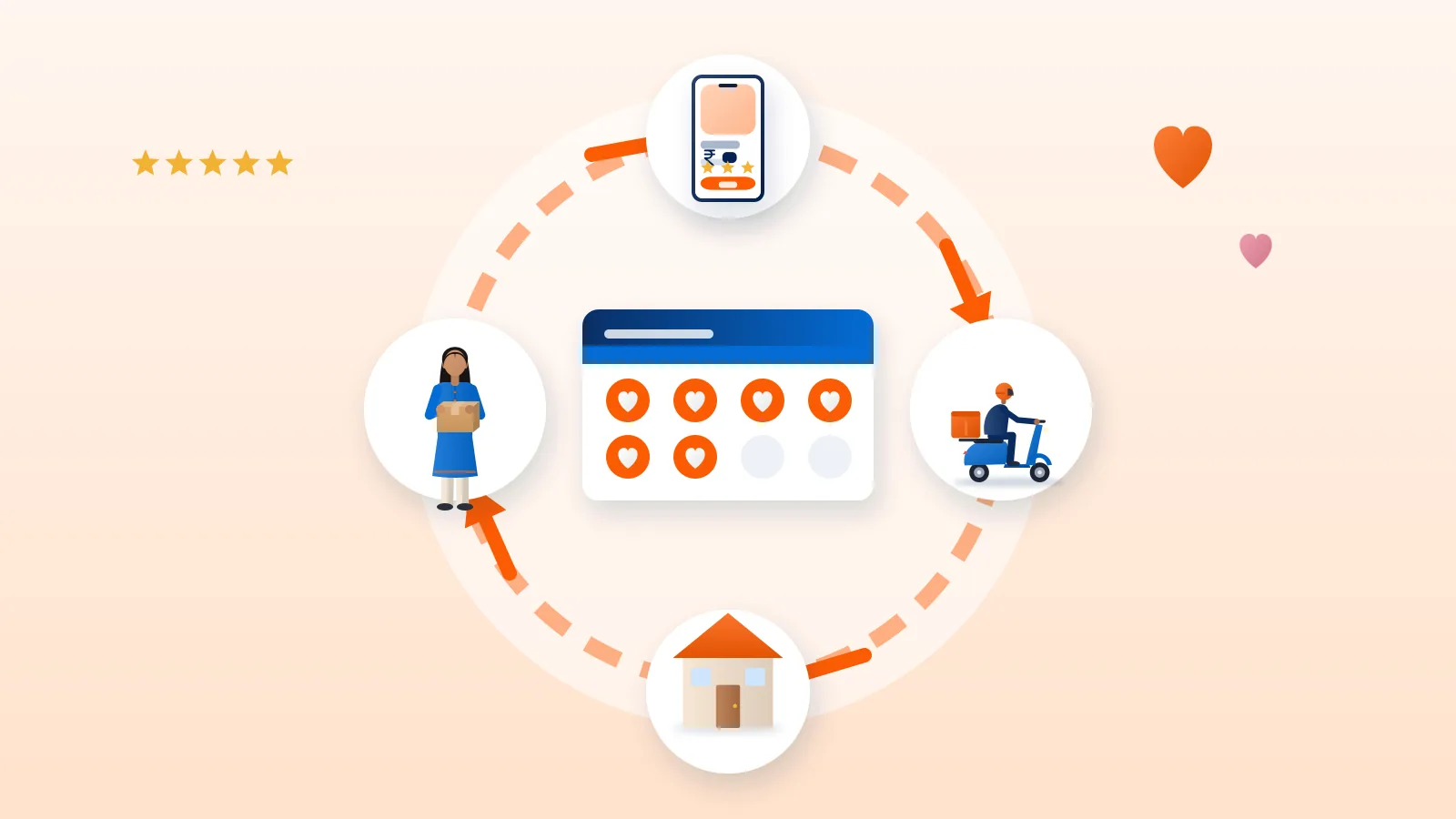
Most online sellers spend their energy, and their ad budget, on finding new buyers. Then each buyer orders once and disappears. The business keeps paying to refill a bucket with a hole in it.
Repeat customers fix that hole. This guide explains why they matter so much to an online store’s profit, how to measure whether you have them, and what actually brings a buyer back for a second, third and tenth order. It is for sellers who already have some orders and want more of them to come from people who have bought before.
Why repeat buyers are where the profit is
Think about what a first order carries. You paid to acquire that buyer through ads, influencer posts or marketplace fees. You may have offered a first-order discount. You shipped a parcel to an unknown address, with a higher chance of a refused COD order. On many first orders, the margin after all of that is thin or negative.
A second order from the same buyer carries little or none of that acquisition cost. You already have their address, they already trust you, and they are more likely to pay online.
A worked example
Take a seller of millet breakfast mixes in Mysuru. Assume these numbers (an illustration, not real data):
| Per customer | First order | Each repeat order |
|---|---|---|
| Order value | ₹900 | ₹900 |
| Product, packaging and shipping | ₹550 | ₹550 |
| Cost of getting the order | ₹350 (ads) | ₹30 (reminder messages) |
| Profit on the order | ₹0 | ₹320 |
On these figures, a customer who buys once is worth nothing. A customer who buys four times in a year is worth ₹960. The same ad spend produced both; the difference is entirely retention. If your acquisition costs feel too high, our guide on reducing customer acquisition cost works on the other side of this equation.
Measure retention properly
Before you try tactics, know your starting point. Three numbers are enough at first:
- Repeat purchase rate. The share of customers with two or more orders in a period.
- Time to second order. The typical gap between a customer’s first and second purchase. This tells you when to remind them.
- Orders per customer over 12 months. A simple measure of lifetime value.
Use a simple cohort table
Group customers by the month of their first order and see what share bought again in later months. You can build this in a spreadsheet from your order export.
| First-order month | Customers | Bought again within 30 days | Within 90 days | Within 180 days |
|---|---|---|---|---|
| January | 400 | 6% | 15% | 21% |
| February | 380 | 7% | 17% | 23% |
| March (sale month) | 900 | 3% | 8% | 11% |
(Illustrative figures.) Cohorts make patterns visible that a single average hides. In this example, the March sale brought plenty of buyers but few loyal ones, which is common when deep discounts attract bargain hunters.
The first order decides the second
The most effective retention tactic happens before any marketing message: a first order that goes well. A buyer whose parcel arrived late, damaged or after three phone calls is rarely persuaded back by a coupon.
That covers dispatch speed, packaging, an honest delivery estimate, tracking updates and how you handle a failed delivery attempt. We cover the delivery side in depth in how delivery experience drives repeat purchases, so here is just the minimum: dispatch quickly, send a tracking link, and act on failed deliveries the same day.
Make the first delivery count. Courier Tales gives your buyers a tracking link built from courier status updates, and lists failed delivery attempts so you can act on them quickly.
Tactics that bring buyers back
1. Time reminders to how the product is used
The right moment to ask for a repeat order is just before the buyer runs out. If your face serum lasts about six weeks, a reminder in week five is helpful; one in week one is noise. Use your “time to second order” data to set the timing, and adjust by product.
2. Make reordering effortless
A “buy again” link that opens a filled-in cart, saved addresses and a remembered payment method all reduce effort. For consumables, consider a subscription with a discount small enough to protect your margin and an easy way to skip or cancel.
3. Message with permission, and with a reason
Email, SMS and WhatsApp all work for retention, but only with consent and only when the message is useful. WhatsApp’s Business Messaging Policy, for instance, allows businesses to contact people only if they have shared their number and opted in to receive messages. Ask for that opt-in clearly, at checkout or in the delivery confirmation. Our guide on WhatsApp marketing for online sellers covers opt-in and broadcasts in detail.
Useful messages include restock alerts for a sold-out item they viewed, care tips for what they bought, and a new launch that genuinely relates to their last order.
4. Reward the second order, not just the first
Many stores give a discount to new buyers and nothing to existing ones, which tells loyal customers they are worth less. A small, visible benefit on the second order (a sample, a gift-wrapping option, early access to a new range) often works better than a bigger first-order discount.
5. Choose a loyalty structure you can run
| Structure | How it works | Suits |
|---|---|---|
| Points | Earn on each order, redeem later | Frequent, lower-value purchases |
| Tiers | Benefits grow with total spend | Brands with a clear “fan” segment |
| Membership | Paid or invited club with perks | Strong community brands |
| Simple thank-you | Fixed perk on second and fifth order | Small stores starting out |
Start with the simplest one your margins allow. A points scheme nobody understands is worse than none.
6. Turn problems into reasons to stay
Buyers often remember how you handled a problem more than the problem itself. Reply quickly, own mistakes, and make returns and exchanges straightforward. Our guide to the buyer-facing returns experience covers how to design a returns process that keeps customers.
7. Give them something new to come back for
A store with three products gives a happy buyer few reasons to return. Add complementary items (a refill pack, a travel size, a matching accessory) and launch on a rhythm customers can learn to expect.
Segment before you send
Not every past buyer should get the same message. A simple split works well:
- Recent and frequent: your most valuable customers. Early access, thank-yous, requests for reviews and referrals.
- Bought once, recently: focus on the experience, then a well-timed second-order nudge.
- Bought before, gone quiet: a “we’ve added something new” message, sent sparingly.
- Returned or complained: check the issue was resolved before sending any promotion.
What to avoid
- Discounting every message. Buyers learn to wait for the code.
- Messaging daily. Unsubscribes and blocks remove your channel for good.
- Ignoring delivery problems while spending on retention campaigns.
- Treating marketplace buyers as yours to message outside the marketplace’s rules.
Final thoughts
Retention is less about clever campaigns and more about a dependable experience, well-timed reminders and a reason to come back. Measure your repeat purchase rate by cohort, fix the first order, and build from there. Each improvement compounds, because every buyer you keep is one you don’t have to pay to replace.
Dependable delivery is where repeat business starts. Create your Courier Tales account to compare courier options for each order, share tracking links with buyers and act quickly on failed deliveries.
Frequently asked questions
What is a repeat purchase rate?
It is the share of customers who have placed more than one order within a chosen period. Divide the number of customers with two or more orders by the total number of customers in that period. Track it by the month customers first bought, so a big sale doesn't distort the picture.
How soon should I contact a customer after their first order?
Start with useful messages: order confirmation, dispatch and tracking, then a check that the product arrived well. Save the next-purchase message for when they are likely to need you again, which depends on how long your product lasts. A buyer of a 30-day supply needs a nudge around week three, not on day two.
Are loyalty points worth it for a small online store?
Sometimes, but they are not the first thing to build. A simple, visible benefit for returning buyers, such as early access to new launches or a small thank-you on the second order, is easier to run and explain. Add a points scheme once you know your margins can carry it.
Can I send marketing messages on WhatsApp to every past buyer?
Not without their agreement. WhatsApp's Business Messaging Policy says businesses may contact people only if they have given their number and have opted in to receive messages. Collect that opt-in clearly at checkout or after purchase, and make it easy to stop.
Which products are hardest to get repeat orders for?
Products bought once in a long while, such as furniture, appliances or wedding wear, naturally have low repeat rates. Sellers in those categories focus on referrals, related accessories and reviews rather than frequent reorders.
Sources
- WhatsApp Business Messaging Policy, WhatsApp (accessed 2 November 2026)
Courier, marketplace and tax rules change. Check the current terms with your courier, marketplace or adviser before relying on them.