
A Tiruppur garment maker gets two overseas enquiries in one week. One is a boutique in Dubai wanting a few sample pieces urgently. The other is an importer in Rotterdam wanting a first order of several hundred kilograms for next season. Both are exports, but they should not travel the same way.
Indian sellers have three main ways to move goods abroad: international courier, air cargo and sea freight. This guide compares international courier vs air cargo vs sea freight on the things that decide the choice: shipment size, urgency, paperwork, who clears customs, how charges are calculated and who the buyer is. It uses relative terms rather than quoted rates or transit days, because both change by lane, season and provider.
The three modes in one paragraph each
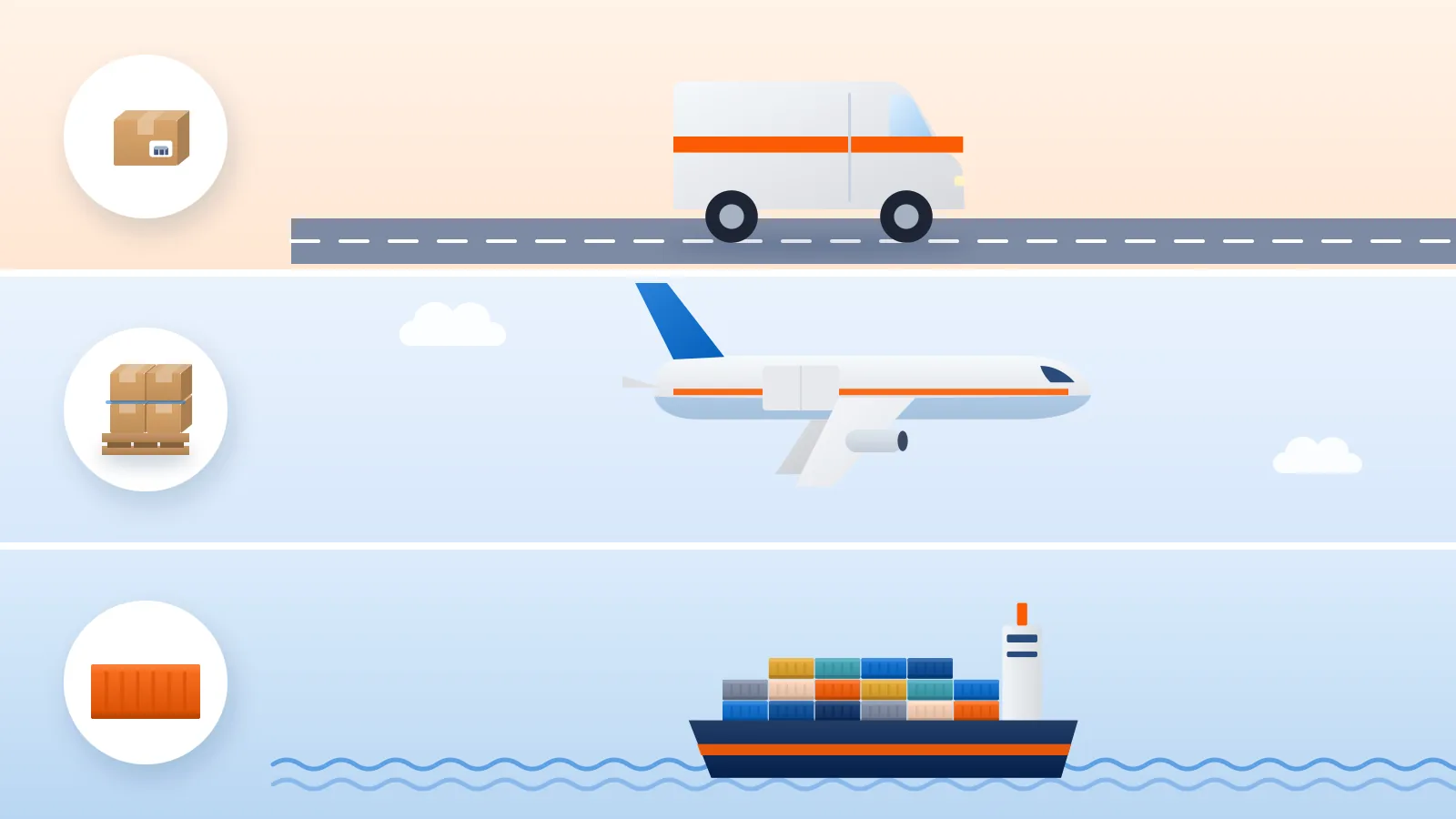
International courier. The courier picks up from your premises, carries the parcel through its own network, files the export declaration at an International Courier Terminal, clears it at the destination, and delivers to the buyer’s door. You deal with one company and get one tracking number. It is built for parcels.
Air cargo. Goods move airport to airport on an airline, usually booked by a freight forwarder who consolidates shipments. A customs broker files the shipping bill in India; the buyer’s broker clears the goods at the destination, and someone arranges delivery from the destination airport. It is built for consignments too large for courier economics but needed faster than sea.
Sea freight. Goods move in containers by ship, either in a full container (FCL) or sharing one (LCL). The forwarder and broker handle bookings and clearance at the port. It is built for large, heavy, planned shipments where time matters less than cost per unit.
Side-by-side comparison
| International courier | Air cargo | Sea freight | |
|---|---|---|---|
| Typical shipment | Parcels and small multi-box orders | Larger consignments, pallets | Large volumes, pallets, containers |
| Speed | Quickest door to door | Quick port to port; add time for clearance and local delivery | Slowest; planned weeks ahead |
| Door-to-door | Yes, as standard | Only if you add pickup and delivery | Only if you add them |
| Who files the Indian export declaration | The authorised courier (courier shipping bill) | Your customs broker (shipping bill on ICEGATE) | Your customs broker |
| Destination clearance | Usually the courier | The buyer’s broker, or yours if agreed | The buyer’s broker, or yours if agreed |
| How charges are worked out | Chargeable weight by zone, plus surcharges | Chargeable weight per kg, often with minimum charges, plus airport and handling fees | Per cubic metre or by weight (LCL), or per container (FCL), plus port and handling charges |
| Paperwork for you | Invoice, packing list, details for the courier | Invoice, packing list, plus documents your forwarder and broker request | Same as air, plus sea-specific documents |
| Good for | Consumer orders, samples, urgent B2B | Urgent trade orders, high-value goods, perishables | Bulk trade orders, stock for overseas warehouses |
What changed for courier exports in 2026
Until March 2026, commercial courier exports had a value cap of ₹10 lakh per consignment, so some orders had to move as cargo because of value alone. CBIC removed that cap from 1 April 2026. The PIB release says this removes the need to divert such shipments to conventional air or sea cargo solely because of value.
That does not make courier right for every high-value shipment. A heavy or bulky consignment can still cost less per kilogram as cargo. But you can now choose based on size, weight, urgency and cost, rather than a value limit.
Shipping parcels to buyers abroad? With Courier Tales you can book international shipments from your dashboard: compare carriers for the destination, see an estimated price, and send the parcel to our warehouse, where it is re-measured before the final price is set.
How to decide: five questions
1. How big is the shipment?
Weight and volume decide most of the answer. Courier pricing is designed for parcels. As a consignment grows, there comes a point where air cargo’s per-kilogram pricing, even with minimum charges and handling fees, works out lower. Grow further and sea freight’s per-cubic-metre pricing takes over. Where those crossover points sit depends on your lane, the goods and your providers, so get quotes for your actual shipment rather than relying on rules of thumb.
2. How urgent is it?
Samples for a buyer deciding this week, replacements for a damaged order, or a festive restock that must arrive before a date all point to courier or air. Planned seasonal stock booked months ahead suits sea.
3. Who is the buyer?
A consumer expects a parcel at the door with tracking, which is what courier provides. An importer or distributor usually has a broker and a warehouse, is used to receiving cargo, and may prefer sea or air cargo to bring down landed cost.
4. Who handles clearance and delivery at the destination?
With courier, door-to-door is the default. With cargo, decide in your contract who clears the goods at the destination and who delivers them from the port or airport. This is where Incoterms come in. The International Chamber of Commerce publishes the Incoterms 2020 rules, eleven three-letter terms used in business-to-business sales contracts to set out which party handles which costs and risks. Agree the term with your buyer in writing; your forwarder will quote accordingly.
5. What is the product?
Perishables, high-value goods and fragile items often favour air for speed and handling. Heavy, durable, low-value-per-kilogram goods such as furniture, stone or bulk textiles suit sea. Regulated goods (food, chemicals, some cosmetics) need the right certificates whichever mode you use, and some may face restrictions on air.
Worked scenarios
These are illustrations, not recommendations for specific lanes.
| Scenario | Likely mode | Why |
|---|---|---|
| Ten online orders a week to buyers in the UK and US | International courier | Individual parcels, door-to-door, tracking for consumers |
| 3 kg of fabric samples for a buyer in Dubai, needed this week | International courier | Small, urgent, needs door delivery |
| A 250 kg trade order of handicrafts for a retailer in Singapore, needed in a fortnight | Air cargo (compare with courier) | Too large for courier economics in many cases; time-bound |
| Several cubic metres of home linen for an importer in Europe, next season | Sea freight (LCL) | Large, planned, cost per unit matters most |
| Moving stock to a warehouse abroad, then shipping local orders from there | Sea or air cargo, then local delivery | Bulk inbound, domestic last mile in the destination |
Many growing exporters use more than one mode: sea or air cargo for planned bulk stock, and courier for samples, urgent orders and individual buyers. For more on the cargo side, see our cargo shipping guide for India, and for the domestic version of this decision, our comparison of air cargo vs surface cargo.
Paperwork differences that catch sellers out
- Courier. You give the courier an invoice, packing list and your IEC, GST and AD code details; the courier files the shipping bill. Simple, but the details must be right.
- Cargo. You appoint a forwarder and a customs broker, share the same core documents, and respond to their requests for anything else the product or destination needs. Your contract with the buyer must state the trade term.
- Both. The invoice value, description and HS code must be consistent everywhere. Inconsistency is the most common cause of customs holds. Our guide to customs clearance for international shipments covers holds and how to clear them.
Comparing the true cost
Do not compare a courier’s door-to-door price with a cargo freight rate alone. For cargo, add:
- pickup and transport to the airport or port
- origin handling, documentation and broker fees
- destination handling, clearance and delivery to the buyer
- duties and taxes, if you are paying them
- insurance, if not included
Then compare that total with the courier’s all-in figure. Our guide to international shipping costs from India breaks down the courier side.
Final thoughts
There is no single right mode. Courier is built for parcels and consumers, air cargo for urgent or valuable consignments, and sea freight for planned volume. Ask the five questions for each shipment, compare total landed cost rather than headline rates, and you will usually find the answer is obvious.
If your overseas orders are parcels headed to buyers’ doors, Create your Courier Tales account and book your first international shipment from the dashboard.
Frequently asked questions
What is the difference between an international courier and air cargo?
An international courier picks up from your door, flies the parcel, clears customs through its own processes and delivers to the buyer's door. Air cargo moves goods airport to airport through an airline, booked by a freight forwarder, with customs brokers handling clearance at each end. Courier suits parcels; air cargo suits larger consignments.
When should I use sea freight instead of air?
Use sea freight when the shipment is large or heavy, the goods are not urgent, and you can plan stock weeks ahead. It suits bulk orders to importers or stock moving to a warehouse abroad. For individual consumer orders, sea freight is rarely practical.
Is there still a value limit for courier exports from India?
CBIC removed the earlier ₹10 lakh value cap per consignment for commercial courier exports from 1 April 2026. Value alone no longer forces a shipment into cargo mode. Size, weight, product type and cost per kilogram still matter when choosing a mode.
What is LCL and FCL in sea freight?
FCL (full container load) means you book a whole container for your goods. LCL (less than container load) means your goods share a container with other shippers' cargo and you pay for the space you use. Small exporters usually start with LCL.
Do I need a customs broker for air cargo or sea freight?
In practice, yes. For cargo shipments a licensed customs broker files the shipping bill and handles export clearance, usually arranged through your freight forwarder. The buyer, or their broker, handles import clearance at the destination.
Sources
- CBIC operationalises comprehensive reforms for e-commerce exports and courier trade from April 1, 2026, Press Information Bureau, Ministry of Finance (accessed 2 November 2026)
- Incoterms 2020, International Chamber of Commerce (accessed 2 November 2026)
Courier, marketplace and tax rules change. Check the current terms with your courier, marketplace or adviser before relying on them.