
A seller of branded sneakers in Pune books a reverse pickup for a “size issue” return. Ten days later the box arrives with an old, worn pair inside. The buyer has already been refunded. The seller has photos, a complaint and no shoes.
Stories like this are why parts of the courier industry offer a quality check (QC) at the buyer’s door before a return is accepted. This guide explains how doorstep QC works as an industry practice, what it can and cannot catch, which products it suits, and how to protect yourself when QC is not available. For the basics of reverse pickups, read what a reverse pickup is first.
What doorstep QC means
In a standard reverse pickup, the executive collects whatever parcel the buyer hands over. Nobody opens it until it reaches you.
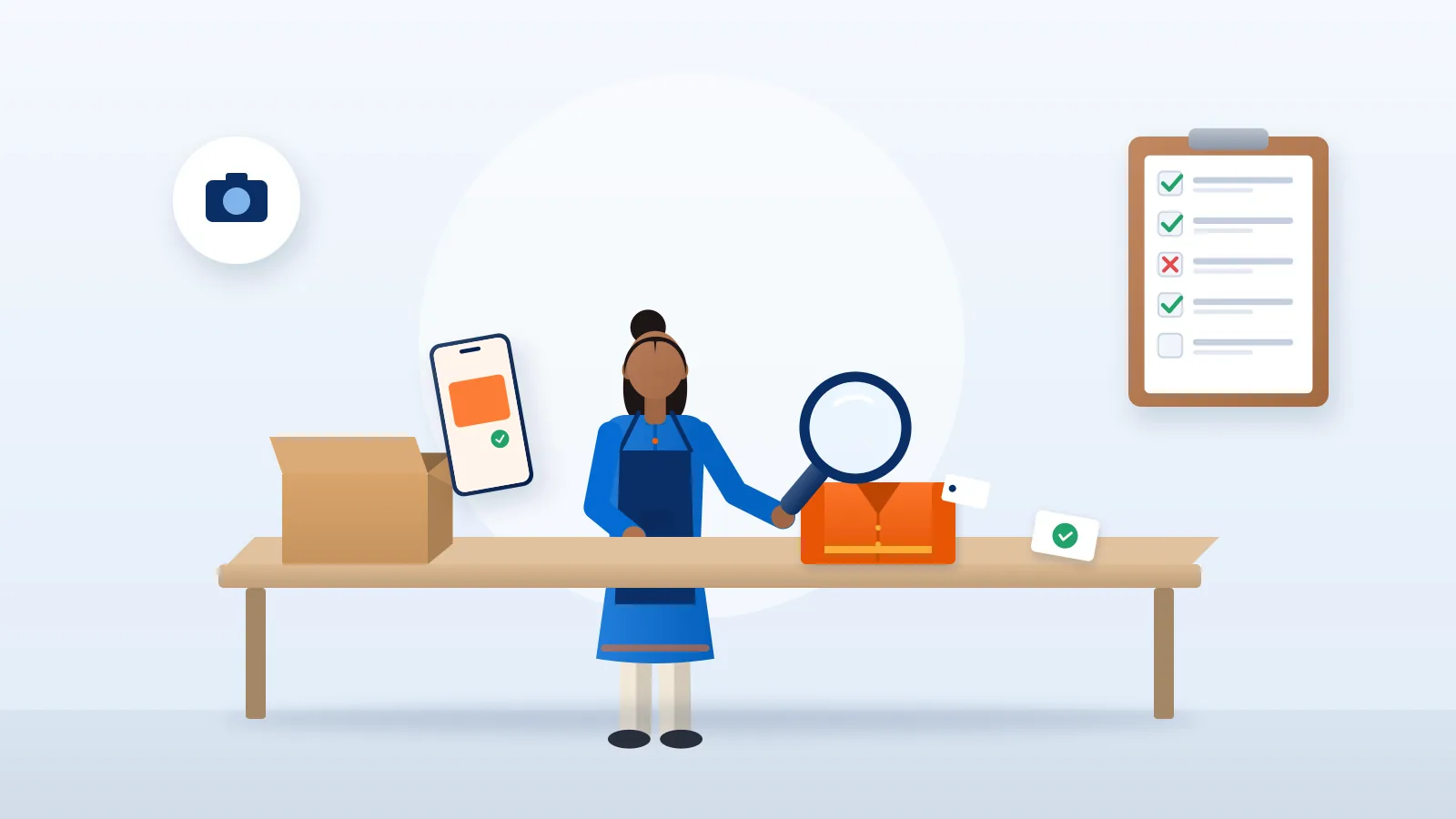
In a reverse pickup with QC, the executive checks the item at the door against information the seller gave when booking the return. If it matches, the parcel is collected. If it does not, the executive typically declines the pickup and records why.
It is an add-on, not a default. Delhivery’s help centre, for example, says that sellers who opt for “Quality Check RVP” are charged an additional cost for the QC process. Other couriers that offer it set their own rules, checks and charges.
What a QC executive typically checks
The checks have to be quick and visible, because the executive is standing at a door with a phone. Across the industry, QC checks commonly cover:
| Check | What the executive looks at | Catches |
|---|---|---|
| Product match | Item against the product name and an image supplied by the seller | Wrong product, a different model or a cheaper copy |
| Quantity | Number of units in the return | Partial returns claimed as full |
| Brand and label | Brand name, logo, label | Counterfeit swaps |
| Size or colour | Size label, colour against the image | A different variant returned |
| Tags and seals | Original tags, seals, security stickers | Used or worn items |
| Visible damage | Scratches, stains, tears | Damage after delivery |
| Serial or IMEI number | Number on the item against the one recorded | Device swaps (electronics) |
| Accessories | Charger, box, manual, bundled gifts | Missing parts |
The seller usually chooses which checks apply to a product. More checks mean more protection but also more pickups that fail at the door, often for minor reasons such as a missing box.
What doorstep QC cannot do
QC is useful, but it is not a full inspection. Be realistic about its limits:
- Hidden defects. A phone case that looks fine but has a cracked internal clip, or a mixer whose motor no longer works, will pass a visual check.
- Sealed or complex items. The executive will not test electronics, try on clothes or open sealed packs.
- Judgement calls. “Unused” is subjective. A sole with faint marks may pass at one door and fail at another.
- Buyer pressure. Arguments at the door are uncomfortable, and an executive may accept a borderline item to avoid one.
So doorstep QC lowers the risk of obvious fraud and wrong returns. It does not replace inspection at your end.
When QC is worth paying for
Run the numbers before you switch it on for everything. Doorstep QC tends to pay off when:
- Items are high-value. One swapped pair of premium shoes can cost more than the QC charge on many returns.
- Swaps are a known problem. Branded fashion, footwear, watches and accessories attract replica swaps.
- Tags prove the condition. Apparel and footwear with tags let the executive judge “unused” quickly.
- Variants are confusable. Sizes and colours that look similar get returned wrongly by honest buyers too.
It is less useful when items are low-value, when checks depend on testing or trying, or when your return rate from fraud is already low. In those cases the extra charge and the failed pickups can cost more than the losses you prevent. For more on how returns add up, see our guide to reverse logistics and returns cost control.
Designing a QC checklist for your products
If your courier offers QC and you decide to use it, set it up carefully.
- Choose checks per category, not one list for everything. Footwear might need product match, size, brand and tags. A mobile accessory might need product match and quantity only.
- Supply a clear reference image. A plain-background photo that shows the features you care about: logo position, sole pattern, colour.
- Keep the list short. Pick the few checks that catch your real problems. Each extra check is one more reason for a pickup to fail.
- Record serial numbers at dispatch. A serial check only works if you noted the number when you shipped the item.
- Tell the buyer in advance. “The courier will check the product, size label and tags at pickup. Please keep the item in its original box with tags attached.” A buyer who knows what will be checked can prepare for it.
- Decide what happens after a failure. Who calls the buyer, within how long, and whether you rebook or reject the return.
Protecting yourself without doorstep QC
QC is not offered by every courier, on every account or in every pincode. You can still cut most of the risk with your own process.
Before dispatch
- Photograph high-value items and their serial numbers while packing.
- Use tamper-evident tags or seals that must stay attached for a return to be accepted.
- Note the tag or seal number against the order.
When the return is requested
- Ask for photos of the item, its tags and any damage before you approve.
- For high-value items, ask the buyer to send a short video showing the product and tags.
- Restate your condition rules in the approval message.
When the parcel reaches you
- Open returns on camera, with the AWB label visible at the start of the clip.
- Compare against your dispatch photos and serial records.
- Refund only after the item passes your inspection, and say so in your policy.
When something is wrong
- Contact the buyer with your photos and video, calmly and quickly.
- If the issue may have happened in transit, raise it with your courier or shipping platform with the same evidence.
- Record the case by buyer, pincode and product, so repeat patterns stand out.
Want to know if QC is possible on your returns? Reverse pickups on Courier Tales run with Delhivery in eligible pincodes; ask our team whether QC is available for your account.
How QC fits with your return policy
Doorstep QC only works if your policy supports it. Your policy should say clearly that returns must be unused, with tags, in original packaging, and that items may be checked at pickup and on arrival. Without that, a failed QC looks to the buyer like an arbitrary refusal. Keep the wording consistent across your product pages, order emails and WhatsApp replies; our guide to the returns customer experience covers how to explain this without sounding suspicious of every buyer.
It also helps to separate honest mistakes from fraud. A buyer who returns the wrong colour by accident needs a polite correction. A buyer who returns an old product in a new box needs a firm refusal with evidence. Treat the first group well and they will keep buying from you.
Final thoughts
Doorstep quality checks are one tool among several. They catch obvious swaps and wrong items at the door, at the cost of an extra charge and some failed pickups. Your own dispatch records, return photos and inspection on arrival catch most of the rest. Use QC where your products and losses justify it, and build the in-house checks either way.
When you are ready to run forward shipments and returns from one place, create your Courier Tales account and book reverse pickups with Delhivery in eligible pincodes, alongside tracking for every order.
Frequently asked questions
What is a quality check on a reverse pickup?
It is an inspection done by the courier's pickup executive at the buyer's door before the return is accepted. The executive compares the item with details the seller supplied, such as the product name, an image, quantity or brand, and collects the parcel only if it matches. It is an optional service that some couriers offer, usually for an extra charge.
Does doorstep QC stop all return fraud?
No. The executive can check what is visible in a few minutes: the right product, quantity, tags and obvious damage. Hidden defects, internal damage and swapped components inside sealed packaging are hard to spot at the door, so you still need to inspect returns when they arrive.
Which products benefit most from QC at pickup?
High-value items, branded goods that are often swapped for copies, and products where tags or seals show whether they were used, such as footwear, apparel with tags, watches and electronics accessories. For low-value items the extra charge and failed pickups may cost more than the fraud you prevent.
What happens if a returned item fails doorstep QC?
Typically the executive does not collect the parcel and the reverse pickup is closed or cancelled with a reason. The seller then contacts the buyer to sort it out. Check your courier's process, because the handling of failed QC differs.
Can I get QC on reverse pickups through Courier Tales?
Ask our team whether QC is available for your account. Reverse pickups on Courier Tales are offered with Delhivery in eligible pincodes.
Sources
- Rate Card, Delhivery Help Centre (accessed 2 November 2026)
Courier, marketplace and tax rules change. Check the current terms with your courier, marketplace or adviser before relying on them.