
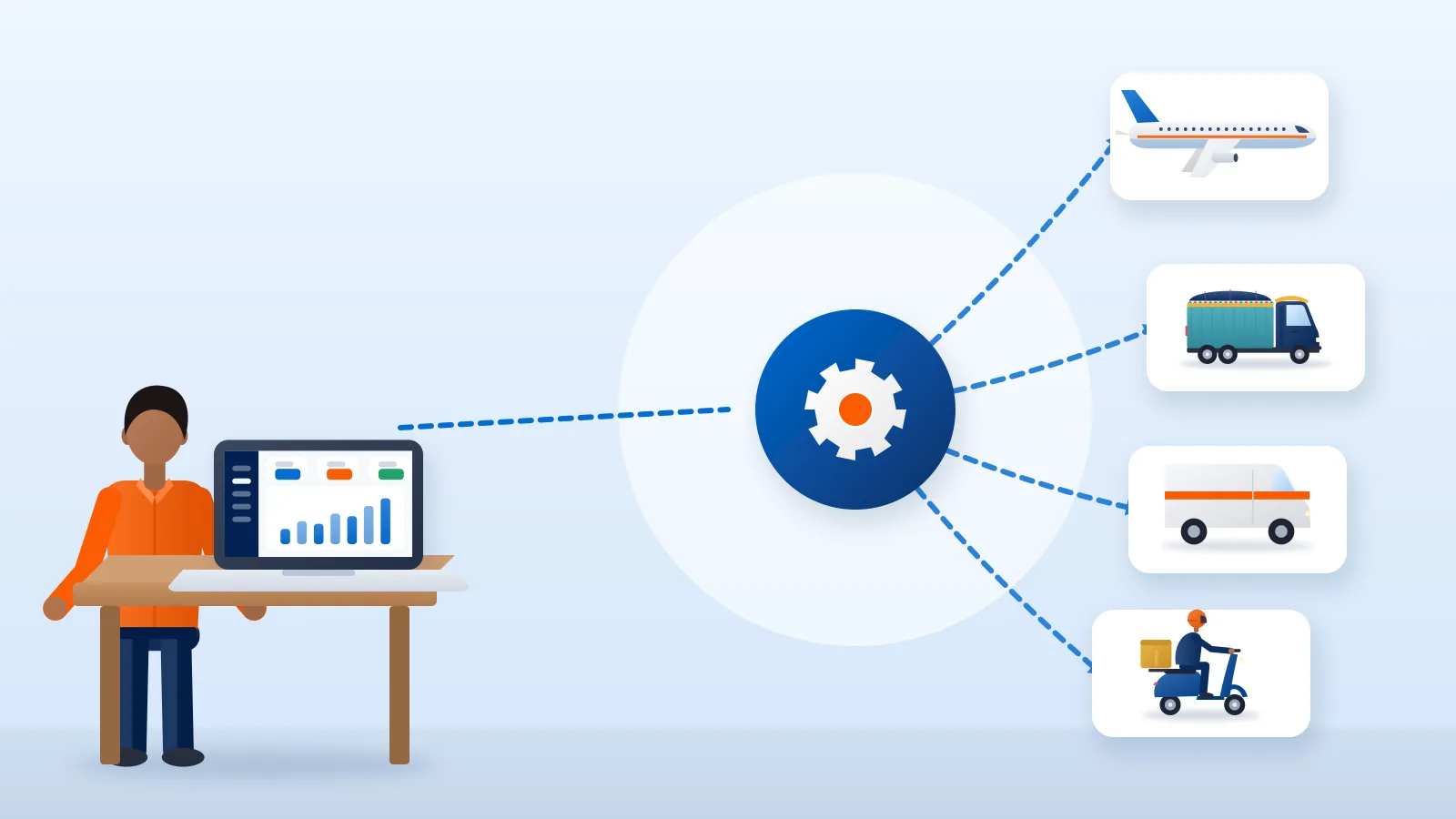
Most online sellers start with one courier. It is simple: one login, one pickup person who knows your address, one invoice. For the first few hundred orders that is often the right choice.
Then the business grows into places the courier does not reach well. Orders to Shillong sit for days. A Diwali sale brings 300 parcels and the pickup van comes once. A pincode in rural Rajasthan is open for prepaid but not COD, and you lose the sale. None of these is a disaster on its own. Together they are a sign you have outgrown a single courier.
This guide covers those signs, what changes when you ship through a multi-courier shipping platform, and what such a platform will not do for you. If you want the mechanics of how aggregators work (contracts, rate cards, wallets and settlements), read what a shipping aggregator is.
Eight signs you have outgrown one courier
1. You turn away orders at checkout
If your store or your team regularly tells buyers “we cannot deliver to your pincode”, you are losing sales you already paid to attract. Check how many orders you cancelled or refused last month for serviceability alone.
2. COD is not available where your buyers want it
A courier may serve a pincode for prepaid parcels but not for COD. If a large share of your buyers in smaller towns want COD and your courier cannot offer it there, a second courier can.
3. One or two lanes keep failing
Look at your RTO and delay figures by state. If most problems come from a handful of lanes, the issue may not be your buyers. It may be that your courier is weak there while another is strong.
4. Pickups slip during sales and festivals
Festive weeks are when you can least afford a missed pickup. If your courier’s capacity at your pincode shrinks exactly when your orders spike, you need somewhere else to send the overflow.
5. Your whole business stops when one account stops
A wallet issue, a KYC re-check, a local disruption or a network problem can pause one courier for a day or longer. With only one courier, your dispatch stops too. A second option is cheap insurance.
6. Returns are hard to arrange
If buyers in many pincodes cannot get a reverse pickup, you end up asking them to post parcels back themselves, which is slow and annoying for them. Reverse pickup coverage differs between couriers.
7. You are shipping things your courier does not handle well
Heavier or multi-box B2B orders, fragile items or bulky products may suit a different courier than your everyday 500 g parcels.
8. Manual work is eating your day
Copying tracking numbers into your store, checking serviceability by hand, booking in one panel and printing labels from another: if shipping admin takes hours a day, the problem is the process, not the staff.
A quick self-check
| Question | Yes / No |
|---|---|
| Did you cancel any orders last month because the pincode was not serviceable? | |
| Do some pincodes you ship to lack COD with your courier? | |
| Does one state or zone account for a large share of your RTOs? | |
| Did you miss a dispatch day during your last sale? | |
| Would a one-day pause on your courier account stop all shipping? | |
| Do buyers struggle to get reverse pickups? | |
| Does shipping admin take more than an hour a day? |
Two or more “yes” answers mean a multi-courier setup is worth testing on real orders.
What changes when you ship through a multi-courier platform
You choose per order, not per business
Instead of sending everything with one courier, you see which couriers serve each pickup and delivery pincode and pick one for that order. You can lean on the courier that performs well on a lane and avoid the one that does not. Our guide on how to choose a courier partner explains how to judge them from your own data.
Rules replace daily decisions
Choosing for every order by hand does not scale. Many multi-courier platforms let you record your preferences once, for example as a courier priority for your account, so routine booking follows them and you only step in for exceptions.
One place for tracking, NDR and RTO
Tracking events from different couriers land in one timeline, and failed delivery attempts from every courier appear in one list. That matters, because an NDR you never saw becomes an RTO you pay for. Our guide to NDR and RTO in e-commerce covers what to do with each one.
One wallet, one set of tools
You recharge one wallet instead of several, print labels in one format, and generate pickup manifests from one dashboard. If you sell on several channels, check how orders from each one reach the platform, whether by store integration or file upload; see multichannel order management.
Outgrown one courier? On Courier Tales you can book Delhivery, Xpressbees, Ekart, Shadowfax and Amazon Shipping (surface), depending on the pincodes and your account settings, and see estimated charges for each before you choose.
What a platform will not fix
It helps to be honest about the limits. A multi-courier platform will not:
- Fix bad addresses. If buyers type incomplete addresses or wrong phone numbers, every courier will struggle. Address checks at checkout and confirmation calls for risky COD orders are still your job.
- Make oversized boxes cheap. Chargeable weight follows your packaging. A large box costs more with every courier.
- Act on NDRs for you. It puts them in one list; someone on your team still has to contact the buyer and choose reattempt or return.
- Choose well without data. If you never review courier performance by lane, a priority list set once and forgotten can keep sending orders to the wrong courier.
- Remove the need to read terms. COD remittance cycles, weight dispute windows and fees follow the platform’s terms as well as the courier’s. Read them.
Moving over without disruption
A platform change should not interrupt dispatch. A simple approach:
- Check coverage first. Run your top destination pincodes through the pincode serviceability checker.
- Complete onboarding before you need it. KYC, pickup address and wallet setup take time.
- Start with a slice. Route one region, one product line or overflow orders through the platform for two to four weeks.
- Compare like for like. Measure cost per delivered order, RTO rate and transit days on the same lanes.
- Keep your old account open until a full COD remittance cycle has passed and open returns have reached you.
If you are also weighing whether to keep a direct courier contract alongside a platform, our guide on aggregator vs direct courier accounts covers the hybrid setup and a detailed switching plan.
Final thoughts
A single courier is a sensible start and a risky long-term plan. When you begin losing orders to coverage gaps, lanes that keep failing or peak-season pickups, the fix is usually not a different single courier. It is the ability to choose the right courier for each order, with all of them visible in one place.
Create your Courier Tales account to compare the couriers that serve your routes and manage every shipment from one dashboard.
Frequently asked questions
What is a multi-courier shipping platform?
It is software that lets you book shipments with several courier companies from one account. You see which couriers serve each route, choose one per order, print labels and track everything in one place instead of logging in to separate courier panels.
When should a small seller move to a multi-courier platform?
Usually when one courier starts costing you orders: pincodes it cannot serve, lanes with high returns, missed pickups during peaks, or too much manual work. If two or more of the signs in this guide apply to you, it is worth a trial.
Will a multi-courier platform lower my RTO by itself?
Not by itself. It lets you route orders to couriers that perform better on each lane and puts failed deliveries in one list, but address quality, COD confirmation and quick follow-up with buyers are still your job.
Can I keep my existing courier account and still use a platform?
Yes. Many sellers keep a direct account with their main courier and use a platform for other lanes, overflow and reverse pickups. Check that you can still see all shipments in one place.